Florida HB 803 for Contractors: Why Freedom Code Compliance Is the Private Provider to Call
Key Takeaways
- A private provider can perform qualifying plan review and inspections so you are not in the building department queue for everything; F.S. 553.791 is the statute, and HB 803 strengthened the framework.
- Cite HB 803 (not HB 405) for private-provider fee savings; the part of HB 405 that died was public construction delay-clause protections — a different issue.
- Commercial fee reductions under F.S. 553.791(2)(d) are 25% partial scope and 50% full scope — not the outdated 50%/75% numbers.
- HB 803 pushes local fees toward actual, reasonable costs and uniform commercial and residential permit applications by July 1, 2027.
- Treat HB 803 as stronger tools, not a guarantee: scope, jurisdiction, and coordination with the local agency still matter.
- Update internal references, train teams on 25%/50%, review your commercial pipeline, and calendar July 1, 2027 for application standardization.
What does HB 803 mean for Florida contractors using a private provider?
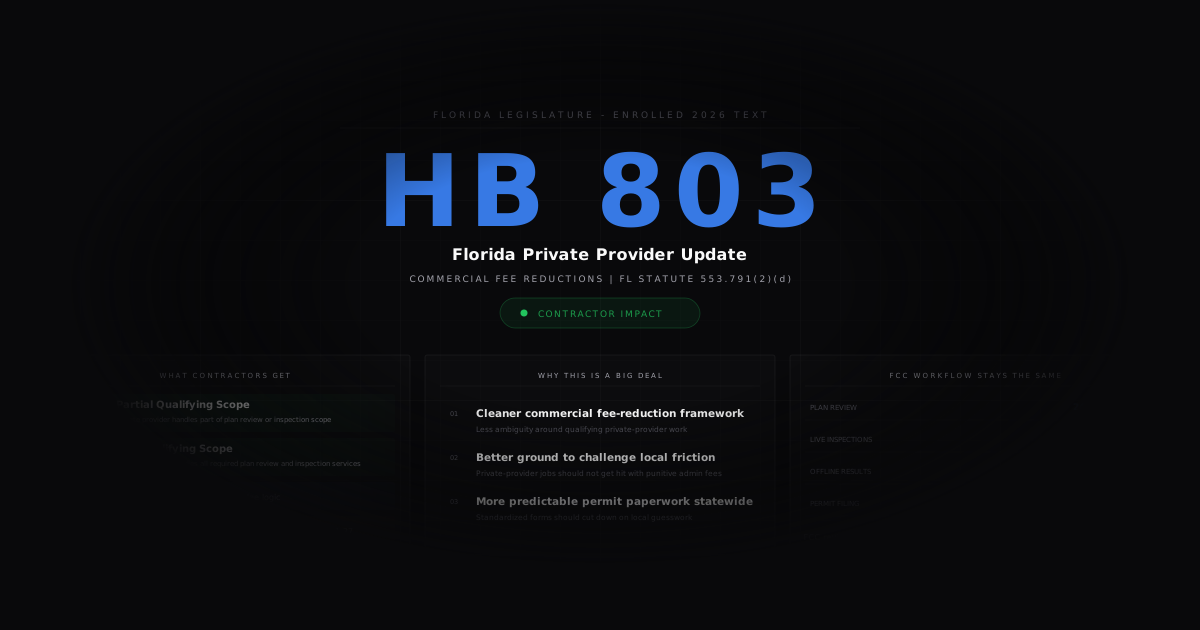
HB 803 is the bill to cite. For commercial projects, F.S. 553.791(2)(d) sets a 25% fee reduction when a private provider handles part of the qualifying plan review or inspection work and 50% when they handle all of it. HB 803 also reinforces cost-based local fees and pushes uniform commercial and residential permit applications statewide by July 1, 2027. The private-provider provisions that matter for day-to-day work moved forward under HB 803, not HB 405.
If you're a contractor working in Florida, you may have heard people talking about HB 405, HB 803, and something called "private providers." Maybe a GC mentioned it at a jobsite, or you saw a post online about permit fee reductions. Either way, you're probably wondering: what actually changed, and does it help me?
The short answer is yes — and the bill you need to know about is HB 803.
Let's break it down in plain terms.
First, What Is a Private Provider?
If you're new to this, a private provider is a licensed engineer, architect, or their designated agent who can handle building plan reviews and inspections on your project instead of the local building department doing all of it.
Think of it this way: normally, when you pull a permit, the local jurisdiction reviews your plans and sends out inspectors. With a private provider, you can hire a qualified professional to do some or all of that work. The local building department still has a role, but you're not sitting in their queue for everything.
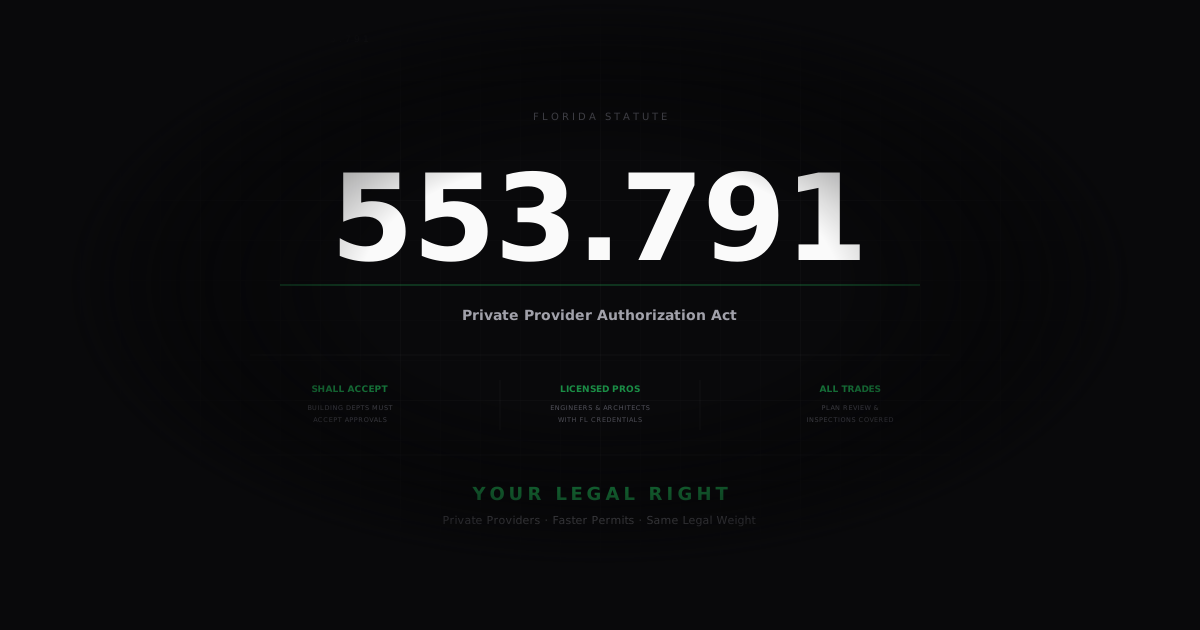
Florida law has allowed private providers for years under Florida Statute 553.791, but HB 803 just strengthened the framework — especially around what it means for your permit fees on commercial work.
Why You're Hearing About HB 803 (and Not HB 405)
There was an earlier bill, HB 405, that got a lot of attention in contractor circles. That created some confusion, because the private-provider language that actually matters for your day-to-day work ended up moving forward under HB 803.
So if someone on your team is still referencing HB 405 as the go-to bill for private-provider fee savings, that needs to be updated. HB 803 is the one that carried the provisions you care about across the finish line.
The part of HB 405 that died was a separate piece about public construction contract delay-clause protections. That's a different issue entirely. The private-provider fee framework you're hearing about? That survived — it just lives under HB 803 now.
So What Do You Actually Get Out of This?
Here's where it gets real for your business. HB 803 helps you in three concrete ways:
1. Lower Permit Fees on Commercial Projects
Under F.S. 553.791(2)(d), when you use a private provider on a commercial project, your permit fees are supposed to come down:
- 25% reduction when a private provider handles part of the qualifying plan review or inspection work
- 50% reduction when a private provider handles all of the qualifying plan review and inspection services
Important note: You may have heard people throw around numbers like 50% and 75%. That's outdated. The correct framework under HB 803 is 25% / 50%. Make sure you and your team are using the right numbers — especially when you're putting together bids or having conversations with owners about project costs.
2. Fairer Fee Structures from Local Governments
HB 803 reinforces that local building departments should be setting their fees based on actual, reasonable costs — not inflated administrative charges. If you've ever felt like a jurisdiction was overcharging on permits without a clear justification, this law pushes back on that by directing local governments toward cost-based fee logic.
That doesn't mean every fee dispute disappears overnight, but it does give you stronger ground to stand on.
3. Standardized Permit Applications Statewide
This one might not sound exciting, but if you've ever pulled permits in more than one Florida county, you know the headache. Every jurisdiction has its own forms, its own formatting preferences, its own intake quirks. You end up burning hours — and sometimes getting kicked back — just because one county wants information laid out differently than another.
HB 803 pushes Florida toward uniform commercial and residential permit applications statewide, with a deadline of July 1, 2027. That means less rework for you, your permit runners, and your back-office team. Less time reformatting paperwork, more time running your business.
How This Affects the Way You Run Your Business
If you have not worked with a private provider before, this law is a good reason to start talking to Freedom Code Compliance now — especially on commercial jobs. Here is the practical picture:
On bidding and budgeting: When you know you're using a private provider on a qualifying commercial project, you can factor the 25% or 50% fee reduction into your numbers. That's real money back in your budget, and it can make your bid more competitive or improve your margins.
On scheduling: This is where Freedom Code Compliance becomes more than a generic private-provider option. FCC is built around fast plan reviews and virtual inspections, so if your project timeline is tight, you are not just hoping for a better experience — you are choosing a team designed to keep work moving instead of sitting in a municipal backlog.
On owner conversations: Property owners and developers want to hear that you know how to save them time and money. Being able to explain the private-provider framework — and getting the numbers right — makes you look sharp and informed.
What This Law Doesn't Do
Let's keep expectations realistic. HB 803 is a meaningful improvement, but it's not a blank check:
- Not every project qualifies for the same savings. The reductions depend on the actual scope of work your private provider handles.
- The local building department doesn't just step aside entirely. They still have responsibilities, and the law still requires coordination between them and your private provider.
- Local process issues won't all vanish overnight. The law gives you better legal footing, but you'll still need to work within each jurisdiction's system.
Think of HB 803 as stronger tools in your toolbox — not a guarantee that every permit interaction will be smooth sailing.
What You Should Do Right Now
If you're running a construction business in Florida, here's your action list:
Update your references. If anyone on your team is still citing HB 405 as the source for private-provider fee reductions, correct that to HB 803 and F.S. 553.791.
Learn the fee structure. Make sure your estimators, project managers, and permit coordinators know the 25% / 50% commercial framework — not the old 50% / 75% numbers that are still floating around.
Look at your commercial pipeline. Review your upcoming commercial projects and ask whether Freedom Code Compliance should be your private provider on the jobs where permit-fee savings and schedule control matter most.
Mark the calendar. The statewide permit-application standardization deadline is July 1, 2027. As that approaches, expect changes in how you submit applications across different jurisdictions.
Talk to your team. Whether it is your office staff, your field supers, or the owners you work for, make sure everyone knows what changed under HB 803 and who you want handling the private-provider side. If your goal is faster turnaround, fewer inspection delays, and a team that actually answers the phone, Freedom Code Compliance should be part of that conversation.
The Bottom Line
Florida just gave contractors a clearer, stronger framework for using private providers on commercial projects. If you haven't explored how private providers can work for your business, now is the time. And if you're already using them, make sure your team is working from the current law — not last year's talking points.
The bill is HB 803. The statute is F.S. 553.791. The commercial fee reductions are 25% and 50%. Get those three things right, and you're ahead of most contractors in the state.
Frequently Asked Questions
Is HB 405 still the bill I should be referencing for private-provider fee reductions?
No. The private-provider provisions that matter for contractors moved forward under HB 803. The corresponding statute is Florida Statute 553.791.
What fee reductions can I get on commercial projects?
Under F.S. 553.791(2)(d), you get a 25% reduction when a private provider handles part of the qualifying plan review or inspection scope, and a 50% reduction when they handle all of it.
Does this apply the same way on every project?
No. The reductions depend on your specific project scope, your jurisdiction, and how much of the qualifying work the private provider is actually handling. The law gives you the framework, but the details are project-specific.
Why should I care about the uniform permit application piece?
Because you and your team lose time every time a different jurisdiction asks for the same information in a different format. Standardized applications mean fewer resubmittals, less rework, and more predictable permit intake across the state.
What part of HB 405 died, and does it affect me?
The piece that died was a public construction contract delay-clause protection. If you work in public contracting, that may matter to you — but it's separate from the private-provider fee and process provisions that are now covered under HB 803.
Sources
Frequently Asked Questions
Is HB 405 still the bill I should be referencing for private-provider fee reductions?
No. The private-provider provisions that matter for contractors moved forward under HB 803. The corresponding statute is Florida Statute 553.791.
What fee reductions can I get on commercial projects?
Under F.S. 553.791(2)(d), you get a 25% reduction when a private provider handles part of the qualifying plan review or inspection scope, and a 50% reduction when they handle all of it.
Does this apply the same way on every project?
No. The reductions depend on your specific project scope, your jurisdiction, and how much of the qualifying work the private provider is actually handling. The law gives you the framework, but the details are project-specific.
Why should I care about the uniform permit application piece?
Because you and your team lose time every time a different jurisdiction asks for the same information in a different format. Standardized applications mean fewer resubmittals, less rework, and more predictable permit intake across the state.
What part of HB 405 died, and does it affect me?
The piece that died was a public construction contract delay-clause protection. If you work in public contracting, that may matter to you — but it's separate from the private-provider fee and process provisions that are now covered under HB 803.