Florida Hurricane Shutter Install Checklist for Contractors
Key Takeaways
- Florida contractors should have product approvals, installation specifications, and a site plan or floor plan ready for manual hurricane screen or shutter installations.
- Manual hurricane shutter installation may not require plan review under FBC-B 107.3.5 for 1- and 2-family work, but the AHJ can still require review.
- When review applies, the core checks are wind-borne debris protection, attachment details, product approval or NOA, and review applicability.
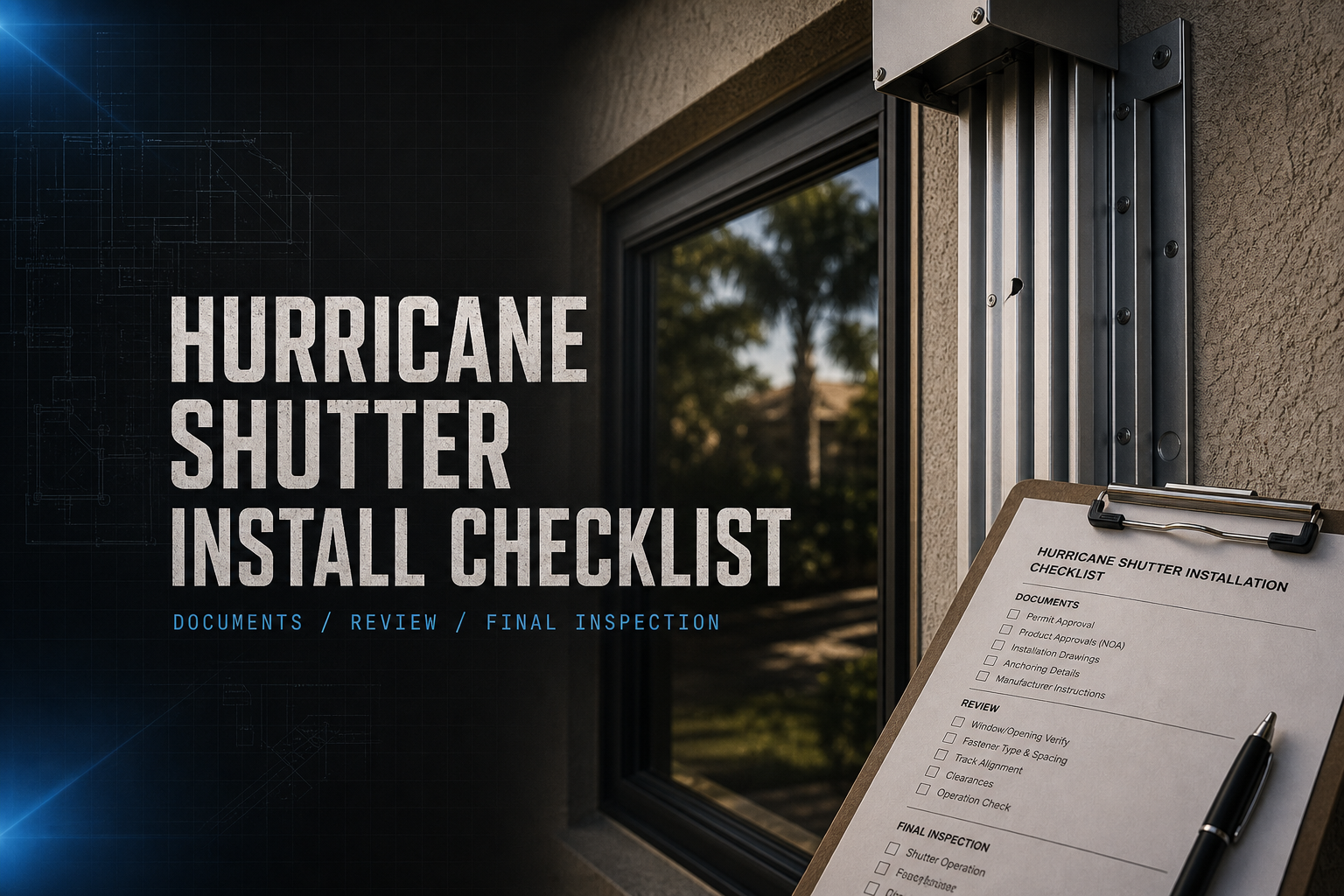
- Final inspection usually verifies product approval, mounting and track installation, operation, and coverage completeness.
- FCC provides a downloadable project guide checklist contractors can use before submitting or requesting inspection.
What documents and inspection items should Florida contractors prepare for single-family manual hurricane shutter installations?
Florida contractors installing single-family manual hurricane screens or shutters should prepare product approvals, manufacturer installation specifications, and a site plan or floor plan showing protected openings. If the AHJ requires review, expect checks for wind-borne debris protection, attachment details, product approval or NOA, and FBC-B 107.3.5 applicability. Final inspection usually verifies product approval, mounting and tracks, operation, and coverage completeness.
Short answer: Florida contractors installing single-family manual hurricane screens or shutters should have product approvals, manufacturer installation specifications, and a site plan or floor plan ready before they submit. For many 1- and 2-family manual shutter scopes, plan review may be advisory instead of required under FBC-B 107.3.5, but the AHJ can still ask for review or additional documentation. The final inspection usually comes down to product approval, mounting, operation, and coverage.
Before hurricane season gets busy, get the paperwork and inspection path clean. A missing FL number, unclear attachment detail, or incomplete opening layout can turn a simple shutter job into a callback, failed final, or permit delay.
FCC has a project guide and downloadable checklist for this exact scope: Single Family Manual Hurricane Screen/Shutters — Required Documents & Inspections.
Who This Guide Is For
This is for Florida contractors installing manual hurricane screens, shutters, or similar opening-protection systems on single-family homes.
It is especially useful for:
- aluminum contractors
- hurricane shutter installers
- window and door contractors
- remodelers handling storm-prep work
- home builders closing out seasonal protection scopes
The goal is simple: avoid missing documents, avoid inspection surprises, and keep the job moving before the hurricane-season rush.
Required AHJ Documents for Manual Hurricane Shutters
For this project type, start with the documents the AHJ is most likely to ask for. Even when the scope is straightforward, the permit record needs enough information to show what product is being installed, where it is being installed, and how it is supposed to be attached.
1. Product Approvals
Include the Florida Product Approval for the hurricane screen, shutter, panel, or impact-rated product you are installing. If the product uses a Miami-Dade NOA, have that ready too.
The product approval should match the actual system being installed, not just a similar product from the same manufacturer.
2. Installation Specifications
Submit the manufacturer's installation specifications and attachment details. This is where fastener type, spacing, substrate, embedment, tracks, brackets, and mounting conditions become important.
If the installer in the field cannot match the spec, the final inspection gets harder.
3. Site Plan or Floor Plan
Provide a site plan or floor plan showing where the hurricane protection will be installed. The AHJ and inspector need to know which openings are protected and how the submitted product applies to the house.
Do not make the inspector guess which openings are part of the scope.
Plan Review Criteria: What FCC Checks When Review Is Needed
For single-family manual hurricane shutter installation, plan review is often not required under the minimum criteria in FBC-B 107.3.5. FCC treats this scope as advisory unless the building department requires review or the client opts in.
That said, some AHJs still want a review package. When plan review applies, the key items are practical.
Wind-borne debris protection
In the Wind-Borne Debris Region, glazed openings must be impact-rated or protected by an approved shutter, panel, screen, or covering system. The review looks at whether the submitted protection method fits the required opening-protection path.
Common code references include FBC-R R301.2.1.2 and FBC-B 1609.2.
Attachment to the existing structure
The package should show how the system attaches to the existing structure. Fastener type, spacing, substrate, and embedment matter because they connect the product approval to the actual field condition.
Common references include FBC-B 2002.5 and FBC-R R301.1.
Florida Product Approval or NOA
The FL number or Miami-Dade NOA should be listed for regulated products. This is one of the fastest ways to avoid confusion between what was submitted and what was installed.
Common references include FBC-B 1708 and FBC-R R301.2.1.2.
Plan review applicability
Manual hurricane shutter installation is not listed in the FBC-B 107.3.5 minimum plan review criteria for 1- and 2-family work. FCC reviews it when the AHJ requires review or when the contractor wants an extra set of eyes before inspection.
Final Inspection Walkthrough
Most single-family manual hurricane screen or shutter jobs come down to a Final Building inspection. Your FCC inspector confirms which items apply to the project, but contractors should be ready for these checks.
1. Product approval verification
The installed hurricane screen or shutter should match the submitted Florida Product Approval, Miami-Dade NOA, and approved documents.
Relevant references may include FBC-B 1710.1 and FBC-R R301.2.1.2.
2. Mounting and track installation
Tracks, brackets, anchors, and fasteners need to be installed per the manufacturer's specifications. This is where spacing, substrate, and anchorage details become visible.
Relevant reference: FBC-B 1710.2.
3. Screen or shutter operation
The inspector checks that the screen or shutter deploys, retracts, closes, locks, and operates as intended. A product that cannot operate correctly is not ready for final.
4. Coverage completeness
The protected openings need to match the submitted scope. If the plan or layout says an opening is protected, the installed system should be in place and ready to verify.
Contractor Prep Checklist Before You Submit
Before sending the package to the AHJ or requesting inspection, confirm these items:
- Product approvals are current and match the installed system.
- Manufacturer installation specs are included.
- The site plan or floor plan clearly marks protected openings.
- Fastener, track, bracket, and attachment details are clear.
- Field installation follows the manufacturer's instructions.
- Every shutter or screen operates correctly before inspection.
- The final inspection request matches the actual project scope.
For the full project-specific guide and downloadable checklist, use FCC's project guide: Single Family Manual Hurricane Screen/Shutters.
How FCC Helps Contractors Keep These Jobs Moving
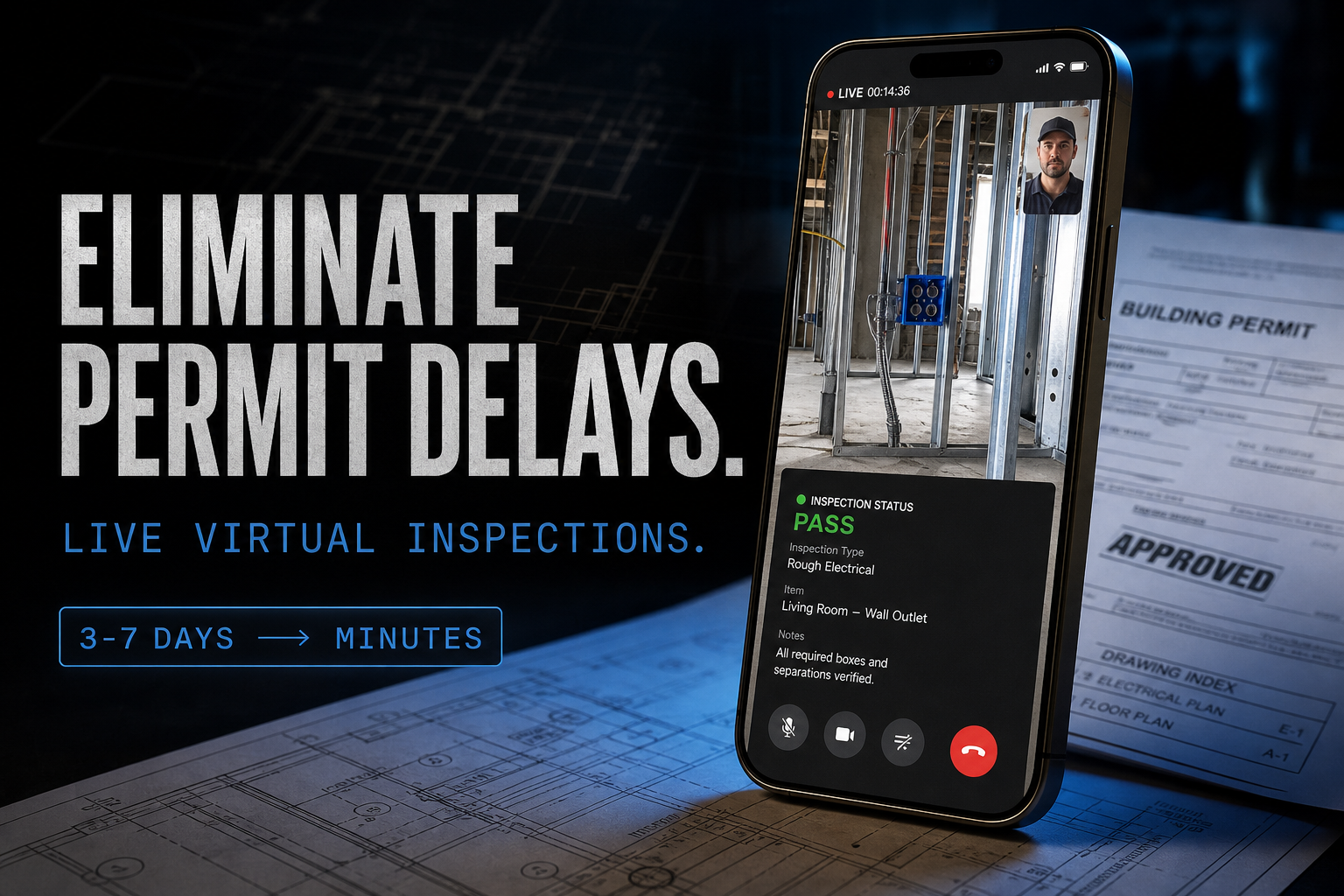
Freedom Code Compliance performs Florida private-provider plan reviews and virtual inspections under Florida Statute 553.791. For shutter contractors, that means you can use FCC to review qualifying packages when review is required or requested, and complete eligible inspections virtually.
FCC does not pull permits or file permit applications for you. Contractors still submit to the AHJ and handle jurisdiction-specific permit intake. FCC helps with the private-provider review and inspection scope so you are not stuck waiting longer than necessary.
Questions on a hurricane shutter job? Call FCC at (772) 222-6679 or start with the checklist.
FAQ
What documents are needed for single-family manual hurricane shutters in Florida?
Contractors should prepare product approvals, manufacturer installation specifications, and a site plan or floor plan showing where the hurricane protection will be installed.
Is plan review required for manual hurricane shutters on a single-family home?
Often, plan review is not required for this scope under FBC-B 107.3.5 minimum criteria for 1- and 2-family work. The AHJ can still require review, and a contractor can opt in for review when they want another check before inspection.
What does the final inspection check?
The final inspection typically checks product approval, mounting and track installation, shutter or screen operation, and coverage completeness for the protected openings.
Can FCC inspect hurricane shutter installations virtually?
FCC performs eligible private-provider inspections virtually under Florida Statute 553.791. The inspection method depends on the project and inspection type.
Bottom Line
Hurricane shutter jobs are easier to close when the documents match the field installation. Before hurricane season gets busy, make sure the product approval, installation specs, opening layout, mounting details, and final operation are ready.
Download the checklist: Single Family Manual Hurricane Screen/Shutters Project Guide.
Frequently Asked Questions
What documents are needed for single-family manual hurricane shutters in Florida?
Contractors should prepare product approvals, manufacturer installation specifications, and a site plan or floor plan showing where the hurricane protection will be installed.
Is plan review required for manual hurricane shutters on a single-family home?
Often, plan review is not required for this scope under FBC-B 107.3.5 minimum criteria for 1- and 2-family work. The AHJ can still require review, and a contractor can opt in for review when they want another check before inspection.
What does the final inspection check for hurricane screen or shutter installations?
The final inspection typically checks product approval, mounting and track installation, shutter or screen operation, and coverage completeness for the protected openings.
Can FCC inspect hurricane shutter installations virtually?
FCC performs eligible private-provider inspections virtually under Florida Statute 553.791. The inspection method depends on the project and inspection type.